Chronic stress, anxiety, fatigue, insomnia: acupuncture helps calm the nervous system and restore quality sleep.
Stress, anxiety and sleep problems often feed into one another. Here are the main reasons for consultation in this area, and how acupuncture can help.

Rumination, a tight chest, a diffuse sense of dread: anxiety often comes with physical tension (a knotted throat, a tight solar plexus, shallow breathing). Acupuncture works on both the mind and these physical manifestations, helping to restore a steadier state.
Chronic stress, whether professional or personal, gradually depletes the body’s reserves of energy. In Chinese medicine, treatment aims to calm the Liver (often under tension with stress) and support underlying energy, helping the body better absorb everyday strain.

Trouble falling asleep, night waking, unrefreshing sleep: acupuncture aims to calm the Shen (the mind, in Chinese medicine) and restore better communication between the Heart and the Kidneys, often at the root of established sleep problems.
Beyond specific indications, an acupuncture session often brings, by itself, a deep release of the nervous system. Many patients feel the effect as soon as the needles are placed — a benefit that, on its own, is sometimes reason enough to come.
We assess your overall constitution (sleep, digestion, emotions, energy) to target the underlying cause. Sessions generally bring a deep sense of relaxation from the moment the needles are placed.

Many patients notice an improvement from the first few sessions; regular follow-up consolidates the results.
Yes, as a complement. Never change a treatment without medical advice.
Often a few closely spaced sessions at the start, then gradually spaced further apart.
Yes. Most patients feel deeply calm, some even doze off on the table.
What happens in the body, the TCM perspective (the Liver), and what acupuncture can offer.
Insomnia, night waking: the TCM perspective on sleep problems.
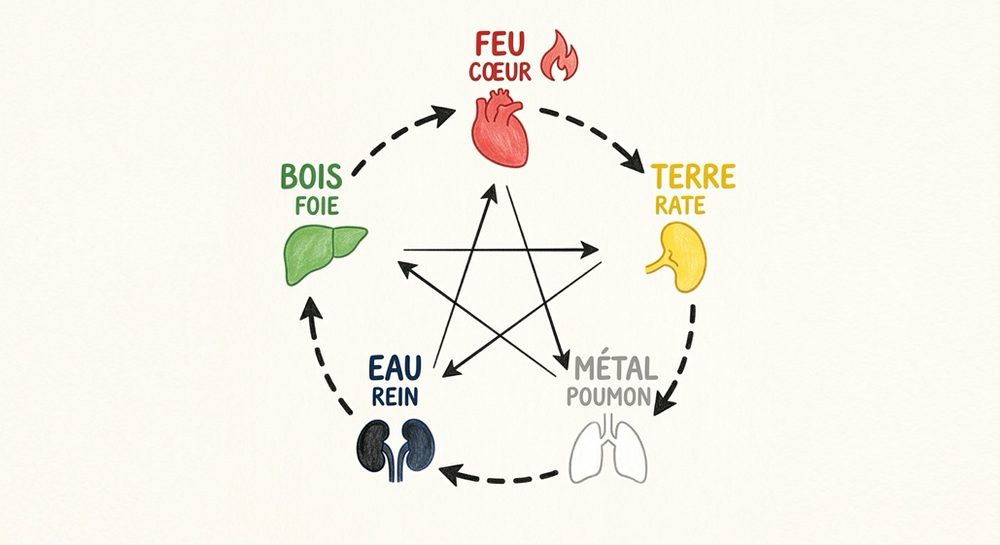
How TCM links each emotion to an organ and a meridian.