Tonifying, calming, and present in many traditional formulas: why jujube holds a special place in Chinese dietetics and herbal medicine.
By Dr Alexandre Fleury · Physician acupuncturist · ~5 min read · Updated October 2026
 Dietetics & Chinese herbal medicine
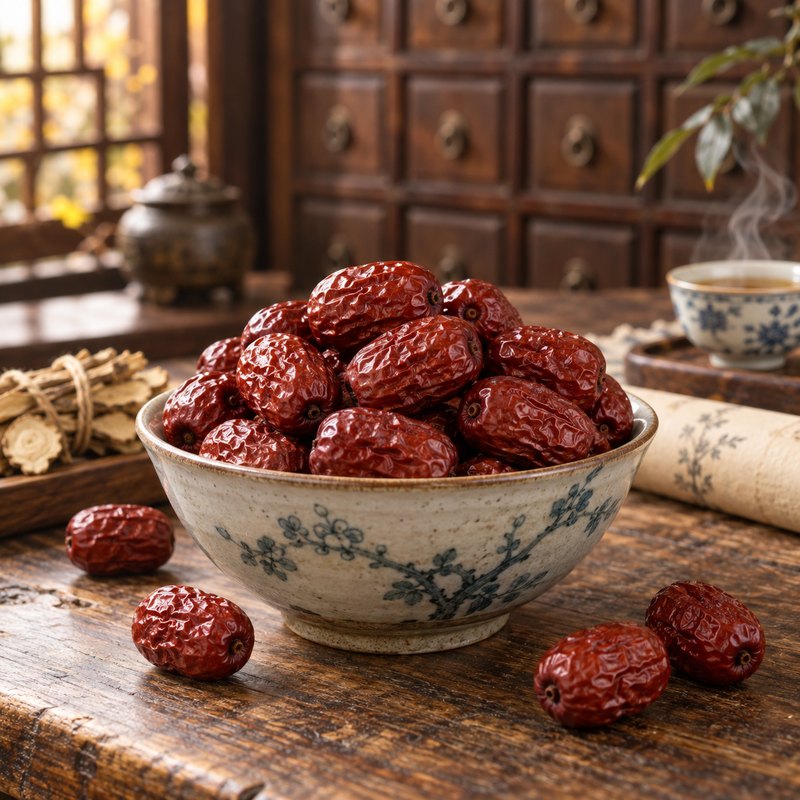
The jujube (Ziziphus jujuba), also known as the Chinese date, is one of the most widely used foods in traditional Chinese medicine — both as an everyday fruit and as an ingredient in many herbal formulas. Dried, it looks like a small, wrinkled, reddish-brown, sweet date; it can easily be found in Asian grocery shops or in pharmacies specialising in TCM.
In Chinese pharmacopoeia, the dried jujube fruit is called Da Zao (“great jujube”). Its nature is warm, its flavour sweet; it enters the Spleen, Stomach and Heart meridians. It is credited with three main actions:
A common confusion is worth clearing up: the fruit of the jujube (Da Zao, the one we eat) is different from the seed of a related wild jujube species, called Suan Zao Ren (literally “sour jujube seed”). The latter is a herb in its own right, used more specifically in herbal medicine for its action on sleep and anxiety (it is notably found in the classic formula Suan Zao Ren Tang). The fruit eaten day to day (Da Zao) and this specific seed (Suan Zao Ren) do not have exactly the same indications, even though they come from the same plant family.
It is a very easy food to work into your diet:
Due to its gentle, tonifying nature, jujube suits a wide range of people: those who are tired, have delicate digestion, are recovering from illness, or are simply looking for a comforting food in autumn and winter. Being warm and sweet in nature, it should be eaten in moderation in cases of significant Dampness-phlegm, being overweight with stagnation, or diabetes, given its natural sugar content — personalised advice from a professional is always preferable if in doubt.
This information is provided for educational purposes and does not replace personalised medical advice. I am not affiliated with any brand or laboratory.