TCM Foundations
The symbolic image
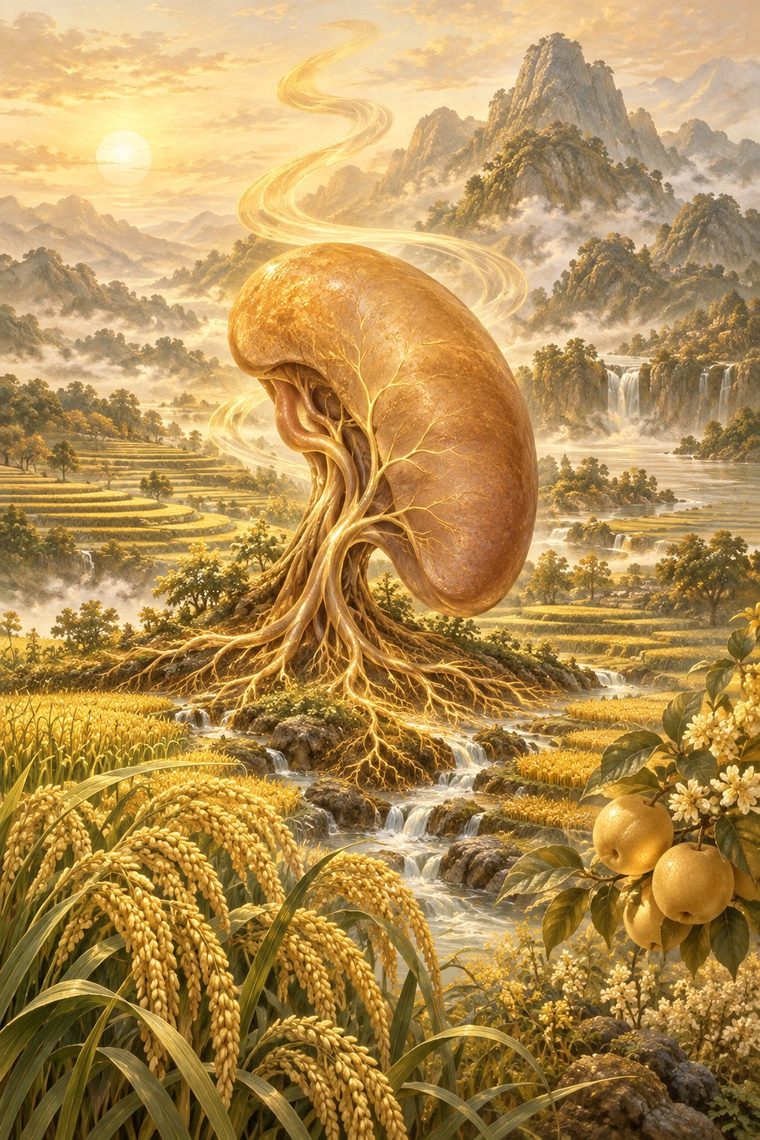
The Spleen is the body’s steward. It receives what the Stomach has prepared and extracts usable energy from it, which it then distributes to the tissues.
How it works in the Chinese model
- Transformation and transport of nutrients: the Spleen extracts Qi from food and drink, separating what is usable from what is not. This Qi is then directed to the Lung and the Heart to produce blood and nourish the body. When imbalanced, loss of appetite, poor digestion, abdominal distension and loose stools can appear.
- Regulating body fluids: the Spleen controls the transformation, separation and movement of fluids in the body, directing the pure part toward the Lung and the impure part toward the intestines. Dysfunction can lead to dampness, phlegm or oedema.
- Supporting the muscles and limbs: the refined Qi extracted by the Spleen nourishes all the tissues, particularly the muscles; a weakness of Spleen Qi can lead to general fatigue and muscle weakness.
- Keeping blood within the vessels: insufficient Spleen Qi can lead to spontaneous bleeding or bruising.
Emotional dimension
The Spleen is associated with thought, reflection and the capacity for concentration. Vigorous Spleen Qi favours clear thinking and good memory, while weakness can lead to slow thinking, poor concentration and memory lapses — and, conversely, excessive intellectual work or overthinking can weaken the Spleen.
When this dynamic is disrupted
Physical symptoms
- Stomach pain, a feeling of bodily heaviness, general weakness.
- Bloating, diarrhoea after meals, indigestion.
- Dry lips, a sallow complexion.
Emotional symptoms
- Anxiety, overthinking, obsessive dwelling on the past.
- A need to conform to expectations, fear of lacking or of falling short.
In case of excess (fullness)
- A tendency to lose weight despite a good appetite.
- Obsessive thinking, constipation.
- Heaviness in the limbs, abdominal pain.
In case of deficiency (emptiness)
- Bloating, watery diarrhoea after meals.
- Indigestion, dry lips.
- Low mood, a sallow complexion.
In daily life
Eating warm, cooked foods, while avoiding an excess of cold and dampness (dairy products, too many raw vegetables), is the foundation for supporting the Spleen day to day.
In practice
- Energy exercises: Qi Gong and Tai Chi support the good circulation of Qi.
- Acupressure and acupuncture: certain specific points can help rebalance the energy (Sanyinjiao, SP6).
- Mindful breathing and meditation: to calm the mind and relieve excessive overthinking.
The Spleen-Pancreas meridian is a fundamental pillar of our balance, both physical and emotional. It supports digestion, nourishes the blood, strengthens the muscles and influences our mental clarity. Taking care of it means cultivating deep, lasting well-being.
This information is provided for educational purposes and does not replace a consultation with a healthcare professional trained in acupuncture.
To go further