To circulate and eliminate
By Dr Alexandre Fleury · Physician acupuncturist · ~4 min read
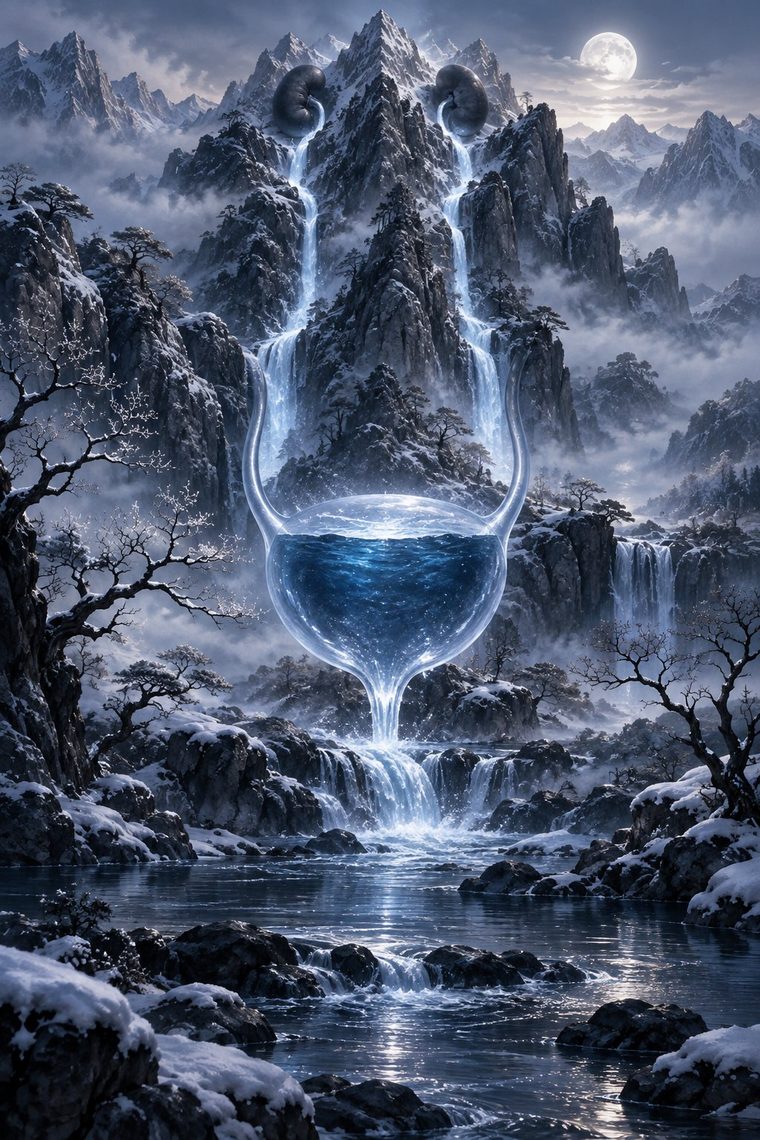
In traditional Chinese medicine, the Bladder meridian is associated with the Water element and forms an inseparable pair with the Kidney meridian. It plays an essential role in managing body fluids, eliminating waste and maintaining energetic and emotional balance.
The Bladder receives the impure fluids separated out by the Small Intestine, transforms them into urine using the energy supplied by the Kidney, then stores them before excretion — a process essential to eliminating waste and maintaining the body’s fluid balance. The Bladder meridian is also the longest in the body: it runs along the spine, where the Back Shu points are found, each linked to a specific organ, which gives it a direct influence on the autonomic nervous system and the emotions.
The Bladder evokes adaptation and the capacity to release tension. An imbalance can show up as nervousness, restlessness or emotional difficulties such as jealousy and suspicion; its pathway is often strained when the back stays tense.
Protecting yourself from cold and damp, and taking care of your back, are the simplest everyday steps to support this meridian.
The Bladder meridian plays a central role in regulating body fluids and emotional balance. By tending to its harmony, we support better waste elimination, greater emotional stability and overall well-being.
This information is provided for educational purposes and does not replace a consultation with a healthcare professional trained in acupuncture.