Understanding baldness — androgenetic alopecia —, the treatments with recognised effectiveness, and what studies show about acupuncture as a complement.
By Dr Alexandre Fleury · Physician acupuncturist · ~6 min read · Updated October 2026
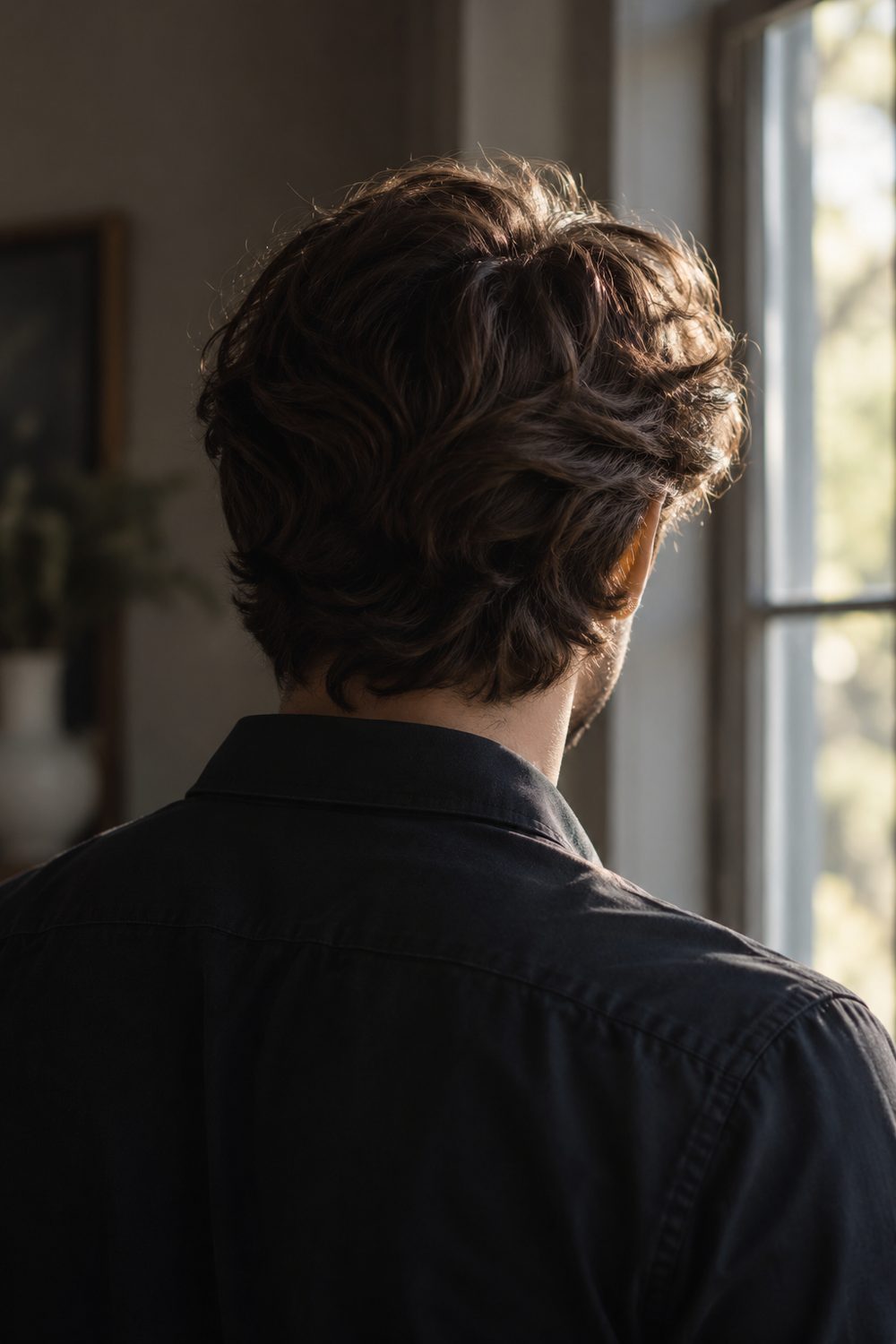
Baldness — what medicine calls androgenetic alopecia, or AGA — affects a large share of men at some point in their lives, and sometimes women, in a different form. It is a progressive form of hair loss, of genetic and hormonal origin, to be distinguished from other types of hair loss (see below).
It typically shows as a receding hairline at the temples and progressive thinning at the crown, following a fairly characteristic pattern. It should be distinguished from the sudden, diffuse shedding that sometimes follows major stress or illness (generally reversible), or from well-defined bald patches, which call for dedicated dermatological advice.
Baldness is linked to the conversion of testosterone into a more active hormone (DHT) at the scalp, which gradually miniaturises hair follicles in genetically predisposed people.
Two treatments have proven their effectiveness and are available in France: topical minoxidil, and oral finasteride on medical prescription. Each has its limits: inconsistent effectiveness, the need for long-term treatment, and for finasteride, possible sexual side effects (lower libido, erectile problems) that deter some patients. Your doctor or dermatologist can help guide this choice.
In TCM, hair is described as the outward reflection of Kidney essence and Blood quality. Depending on the profile, practitioners speak of a Liver-Kidney deficiency, damp-heat, or Blood stasis — traditional interpretive frameworks that guide the choice of points, often located at the crown (Baihui GV20), on the leg (Zusanli ST36) or between the toes (Taichong LR3), alongside local points on the thinning area.
Chinese studies published over the past fifteen years fairly consistently report a benefit from acupuncture, or related techniques (fire needling, thread embedding, plum-blossom rolling needle), most often used alongside minoxidil or finasteride, and not in their place. Several trials note a higher response rate when these techniques are added to standard treatment, as well as a measurable effect on local hormonal markers. One review pooling around thirty trials and more than 2,600 patients reports an overall higher response rate with Chinese medicine approaches compared with conventional medicine alone, with no increase in side effects.
The mechanisms suggested include improved scalp microcirculation, a local anti-inflammatory effect, and a possible stimulation of growth factors involved in the hair cycle. Reported tolerance is good: the effects observed are minor and transient (redness, a feeling of warmth, minor bruising). One point of interest for patients wary of finasteride: in one study, sexual and emotional side effects appeared only in the drug-treated group, never in the acupuncture group. Some Chinese herbal formulas are sometimes combined with these techniques in studies, but they must be individualised and supervised by a trained practitioner — certain traditional herbs are not without risk, particularly to the liver.
I use very small, single-use needles, much finer than a blood-test needle. Most of the time you feel a slight prick, then nothing more. This sensation lasts a few seconds, then settles.
When should you seek medical advice?
Seek medical or dermatological advice if you notice:
This article is intended for information and education. It does not replace a medical consultation and does not constitute personalised advice.