Semen analysis, the possible causes of male infertility, the TCM perspective, and what the studies on acupuncture show.
By Dr Alexandre Fleury · Physician acupuncturist · ~6 min read · Updated October 2026
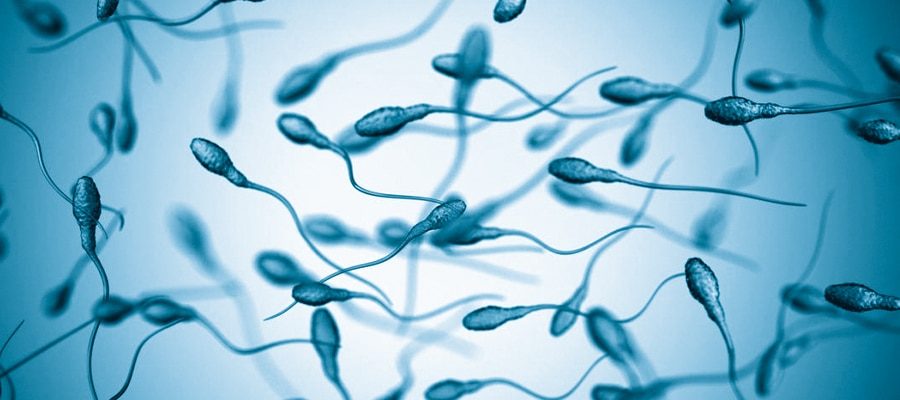
Infertility is not only a women’s issue: in nearly half of couples who struggle to conceive, a male factor is involved. This is often overlooked, which is why a male work-up should be carried out alongside the female one, not as a second step.
Semen analysis is prescribed by a physician. It is carried out after a few days of abstinence (the exact timing is specified by the laboratory) and looks at several parameters: volume, sperm concentration, motility, morphology and sample vitality. Results are compared with international reference values. An abnormal result does not mean permanent infertility: sperm parameters vary naturally from one sample to another, and a second test is often requested before drawing conclusions.
The causes are varied: a varicocele, a history of infection or genital surgery, hormonal or genetic causes, or lifestyle factors that affect sperm quality — smoking, alcohol, repeated heat exposure, being overweight, certain medications or treatments. In a significant proportion of cases, no precise cause is identified.
For TCM, male fertility rests above all on the Kidney essence (the Jing), considered the foundation of reproduction, as well as on the quality of the Qi and Blood that nourish it. Kidney depletion or Liver Qi stagnation linked to stress are patterns often mentioned — traditional frameworks, not medical diagnoses.
Over the past fifteen years or so, several reviews and meta-analyses have looked at the effect of acupuncture on semen-analysis parameters. The results, of modest evidence quality, point in a fairly consistent direction: an improvement in sperm concentration (on the order of a few million more per mL than in control groups according to one meta-analysis), and better motility, particularly the proportion of rapidly progressive sperm. More recent work also suggests an effect on viability, morphology and sperm DNA integrity, but this data remains preliminary.
The mechanisms suggested include an action on reproductive hormones (FSH, LH, testosterone), improved testicular microcirculation, an anti-inflammatory effect, and a reduction in oxidative stress — one of the known causes of sperm DNA damage. Benefits seem more pronounced when acupuncture is combined with other approaches: medical follow-up, lifestyle changes, sometimes Chinese herbal medicine. Certain herbal formulas (such as Wuzi Yanzong Wan) are mentioned in the studies.
Very few studies have measured the effect on what really matters for a couple — pregnancy or live-birth rates. One reassuring point: no notable adverse effects have been reported.
I use very small, single-use needles, much finer than a blood-test needle. Most of the time, you feel a light pinprick, then nothing more. This sensation lasts a few seconds, then settles.
When should you seek medical advice?
Talk to your doctor or a fertility clinic in the following situations:
This article is intended for information and educational purposes. It does not replace a medical consultation and does not constitute personalized advice.