Hot flushes, sleep, mood: the TCM perspective on menopause and the place of acupuncture as a complementary support.
By Dr Alexandre Fleury · Physician acupuncturist · ~5 min read · Updated October 2026
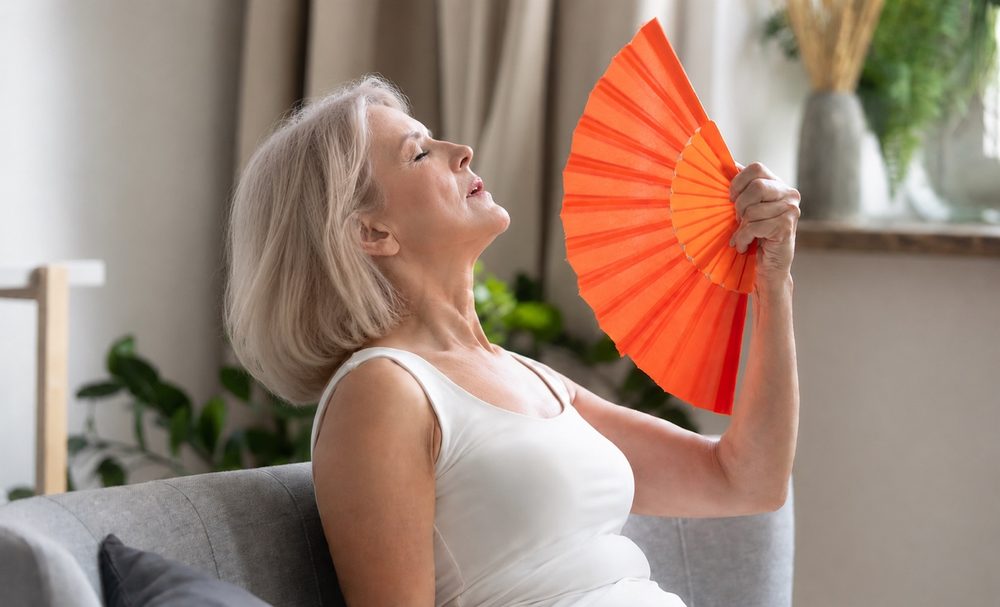
Menopause is not an illness: it is a natural stage in a woman’s life, occurring on average around age 50. It is confirmed after 12 consecutive months without periods. The years leading up to it (perimenopause) are often marked by irregular cycles and variable symptoms — some women are barely affected, others considerably more.
The ovaries gradually produce less oestrogen and progesterone, with fluctuations that explain the variety of signs: hot flushes, night sweats, sleep disturbances, mood changes, vaginal dryness, joint pain, fatigue.
Menopausal hormone therapy may be offered in certain situations: this is a decision to make with your doctor or gynaecologist, weighing benefits and risks. Acupuncture does not replace it; it can be an option for women who cannot or do not wish to use hormone therapy, or as a complement to it.
A founding text, the Su Wen, describes a woman’s life in seven-year cycles: around age 49, the essence that governs fertility (the Tian Gui) is exhausted, and periods stop. TCM therefore sees this as a natural passage, a transition rather than a breakdown.
According to this view, Kidney energy, the source of Yin and Yang, declines. When Yin diminishes, Yang is no longer contained: it rises and escapes — hence the heat, the sweats, the restlessness. The Heart and Kidney no longer communicate as well, which disturbs sleep and mood. Several profiles are distinguished:
Studies on hot flushes give mixed results: acupuncture appears more effective than no treatment, but the gap compared with sham needling is often small. In practice, many women report an overall improvement, and it is on the whole picture that I judge the value of treatment: sleep, mood, joint pain, energy, quality of life.
If you have had breast cancer or are undergoing cancer treatment, your oncologist’s advice is needed before considering any complementary approach.
I use very small, single-use needles, much finer than a needle used for a blood test. Most of the time, you feel a light pinprick, then nothing more. Sometimes you feel nothing at all; some areas are more sensitive than others. This slight discomfort lasts a few seconds, then settles.
You may also feel, around the needle, a dull sensation of heaviness, warmth or tingling: this is expected and not a cause for concern. If anything bothers you, tell me: I can adjust or remove the needle straight away. The lower abdomen and lower back can be more sensitive, especially when the area is already painful: I adapt to your sensitivity, and can start with just a few needles.
When should you see a doctor?
Talk to your doctor or gynaecologist if you notice:
Regular screening (mammogram, smear test depending on age) remains essential during this period.
This article is for informational and educational purposes. It does not replace a medical consultation and is not personalised advice.