Naturally strengthen your defences according to TCM: five seasonal foods to favour to support Qi, the Spleen and the Lung.
By Dr Alexandre Fleury · Physician acupuncturist · ~3 min read · Updated October 2026
 Chinese dietetics
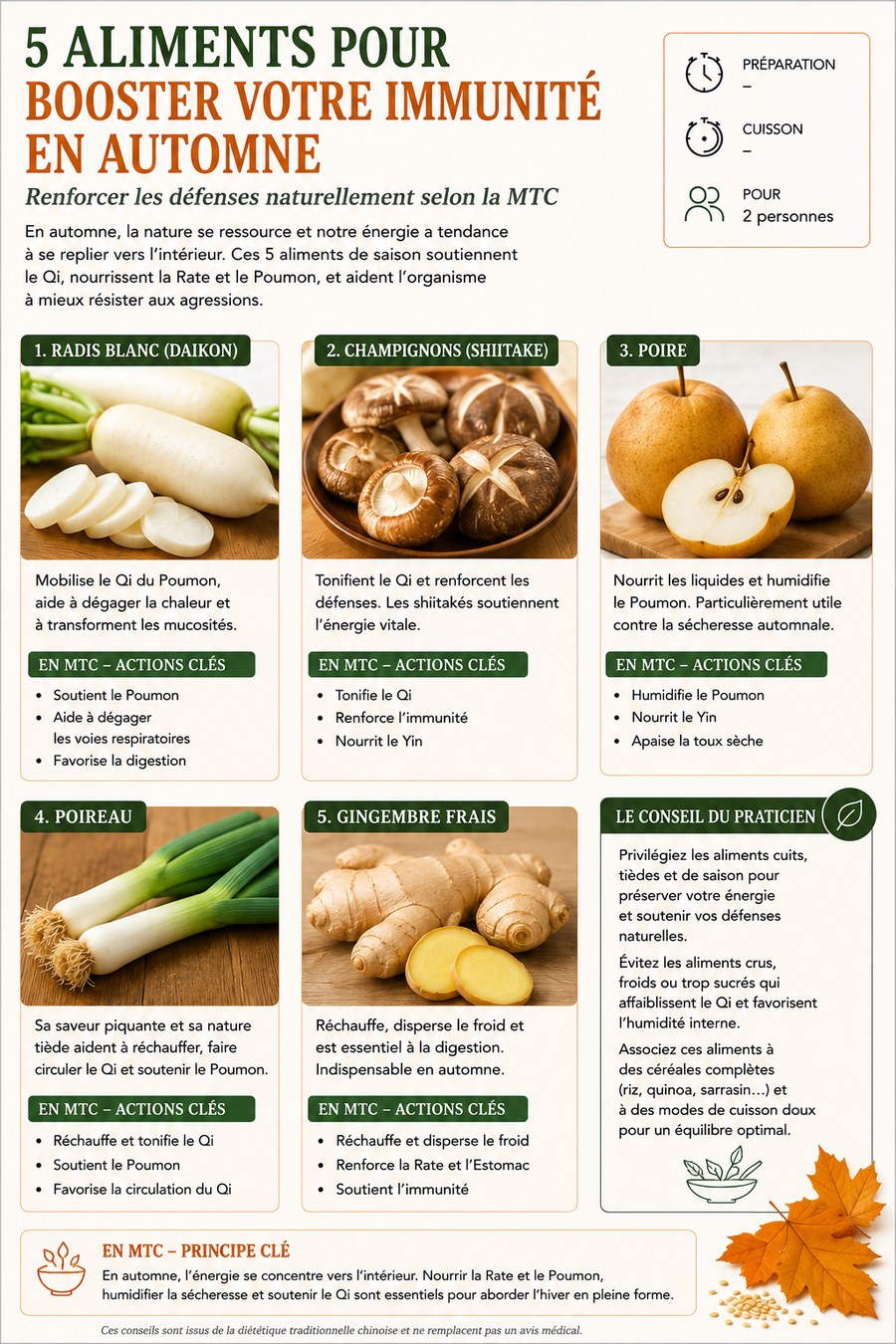
In autumn, nature draws inward and our energy tends to withdraw too. The 5 foods below were chosen because they support Qi (vital energy, in Chinese medicine), nourish the Spleen (the digestive system) and the Lung, and help the body better resist the season’s minor troubles (colds, chills).
Daikon’s action can be summed up as follows: it makes Qi descend and disperses it, which helps clear mucus and relieve a feeling of heaviness after a heavy meal. It suits internal heat or congested digestion particularly well, especially when slow-simmered; raw and in large amounts, it should be eaten more sparingly in case of fatigue or low energy.
Shiitake mushrooms tonify Qi and support vital energy: they are traditionally counted among the foods that strengthen the body’s defences, particularly at the start of the season.
The emblematic food of autumn: it nourishes body fluids and moistens the Lung, which makes it particularly useful against seasonal dryness (dry throat, irritating cough).
Slightly pungent in flavour and warm in nature, leek helps Qi circulate and supports the Lung — useful at the very start of a chill, without overdoing it (see our article on the principle of flavours in autumn).
Warming, it eases digestion and helps disperse cold at the very start of a chill (shivering, a clear runny nose).
Favour cooked, warm, seasonal foods to preserve your energy; avoid raw, cold or overly sweet foods, which weaken Qi and encourage internal dampness. Combine these foods with whole grains (rice, quinoa, buckwheat…) and gentle cooking methods for optimal balance.
These are general principles of Chinese dietetics and do not replace personalised medical advice.
The reference article on autumn dietetics.
02The complete overview of seasonal foods.
03Three traditional preparations to know.
0414 complete recipes to cook.
05Dates, general principles and lifestyle rhythm linked to the season.
06Discover the Lung and Large Intestine meridians.