Understanding sinusitis, how Chinese medicine reads it, and the — modest — place acupuncture can take.
By Dr Alexandre Fleury · Physician acupuncturist · ~4 min read · Updated October 2026
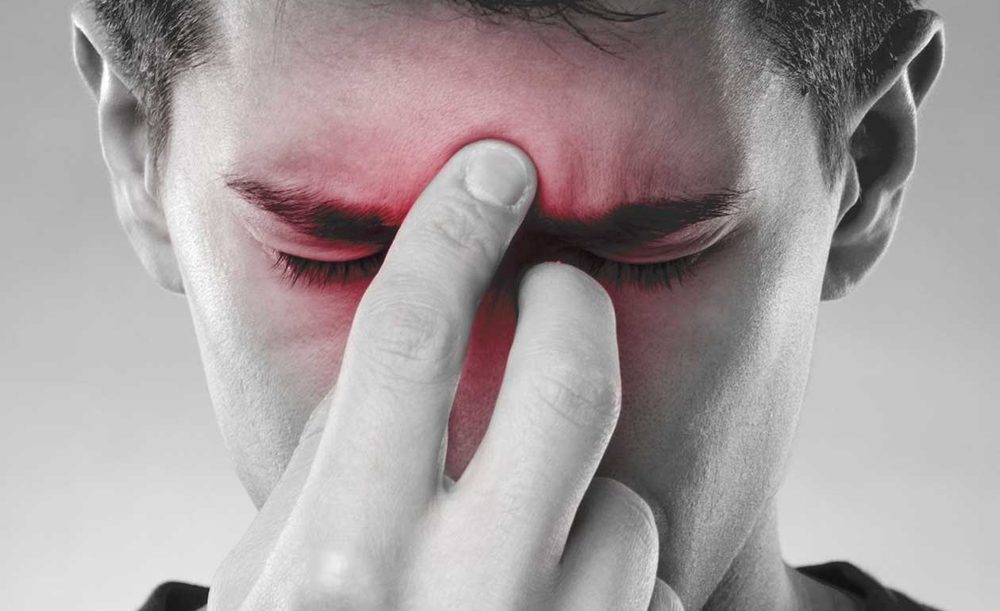
Pressure across the cheeks and forehead, a blocked nose, discharge, a feeling of heaviness in the head: sinusitis is inflammation of the cavities around the nose. It is very common, especially during the colder months. Here is what is useful to know, and the place acupuncture can take.
Acute sinusitis most often follows a cold: it is generally viral and clears up on its own within 7 to 10 days. More rarely, it is bacterial and may call for antibiotics. Chronic sinusitis lasts more than 12 weeks: it may be linked to allergies, polyps or a deviated septum.
An important point: many so-called “sinus headaches” are actually migraines. This is why an accurate diagnosis matters before choosing a treatment.
For TCM, the nose is the “opening of the Lung”, and the Lung protects the body against external attacks (“Wind”, cold, heat). Acute sinusitis is read as an attack of Wind-cold or Wind-heat; chronic sinusitis rather suggests a background where dampness and phlegm accumulate, often linked to weak digestion (the Spleen) or persistent heat in the head.
Tradition also attaches importance to diet: too much sugar, dairy, rich food or iced drinks are, according to TCM, thought to encourage the formation of mucus. This is a principle of traditional medicine, to be taken as such.
I place needles at points on the face (around the nose, between the eyebrows), but also on the hands, feet and neck, with the aim of helping to clear the nose and reduce pressure and pain.
Let’s be honest about the level of evidence: studies on chronic sinusitis are few and inconsistent, and somewhat more solid for allergic rhinitis, with modest effects. In practice, some patients feel very clear relief after 1 to 2 sessions, while for others the effect is slight. Acupuncture should therefore be considered a comfort measure, not a substitute for usual care (saline nasal rinses, local treatments, antibiotics when indicated).
I use very small, single-use needles, much finer than a needle used for a blood test. Most of the time, you feel a light pinprick, then nothing more. Sometimes you feel nothing at all; some areas are more sensitive than others. This sensation lasts a few seconds, then settles.
You may also feel, around the needle, a dull sensation of heaviness, warmth or tingling: this is expected and not a cause for concern. If anything bothers you, tell me: I can adjust or remove the needle straight away.
When should you seek care quickly?
See a doctor without delay if you notice:
This article is for informational and educational purposes. It does not replace a medical consultation and is not personalised advice.